The industry has spent decades trying to stop the tide. We asked what happens if we just make it irrelevant.
Every time a senior relationship manager leaves a private bank, the banker takes something with them that no team structure captures. Not the client, not immediately. The assets stay. The account number stays. The portfolio manager stays. What leaves is the accumulated human context that made the relationship work: who the client actually is, what their world looks like, what they care about, what keeps them loyal. That knowledge lived in one person's memory, and it was never anyone's job to put it anywhere else.
The industry's answer to this has always been retention. Better compensation. Stronger culture. Wellbeing programs. These are reasonable things to offer people, and they are aimed entirely at the wrong target. While they do demonstrably increase retention, ultimately, you cannot stop someone from leaving. You cannot stop someone from retiring. The industry has spent decades and considerable capital trying to solve a problem that was never solvable in the first place, because they were asking the wrong question.
The right question is not how do you keep the banker. It is how do you make the banker's departure irrelevant.
That question has gone unasked because the assumption underneath it is that you cannot build against it. Relationship intelligence has always been treated as personal property: non-transferable, belonging to the individual rather than to the institution. Because everyone assumed it could not be captured, no one built the infrastructure to capture it.
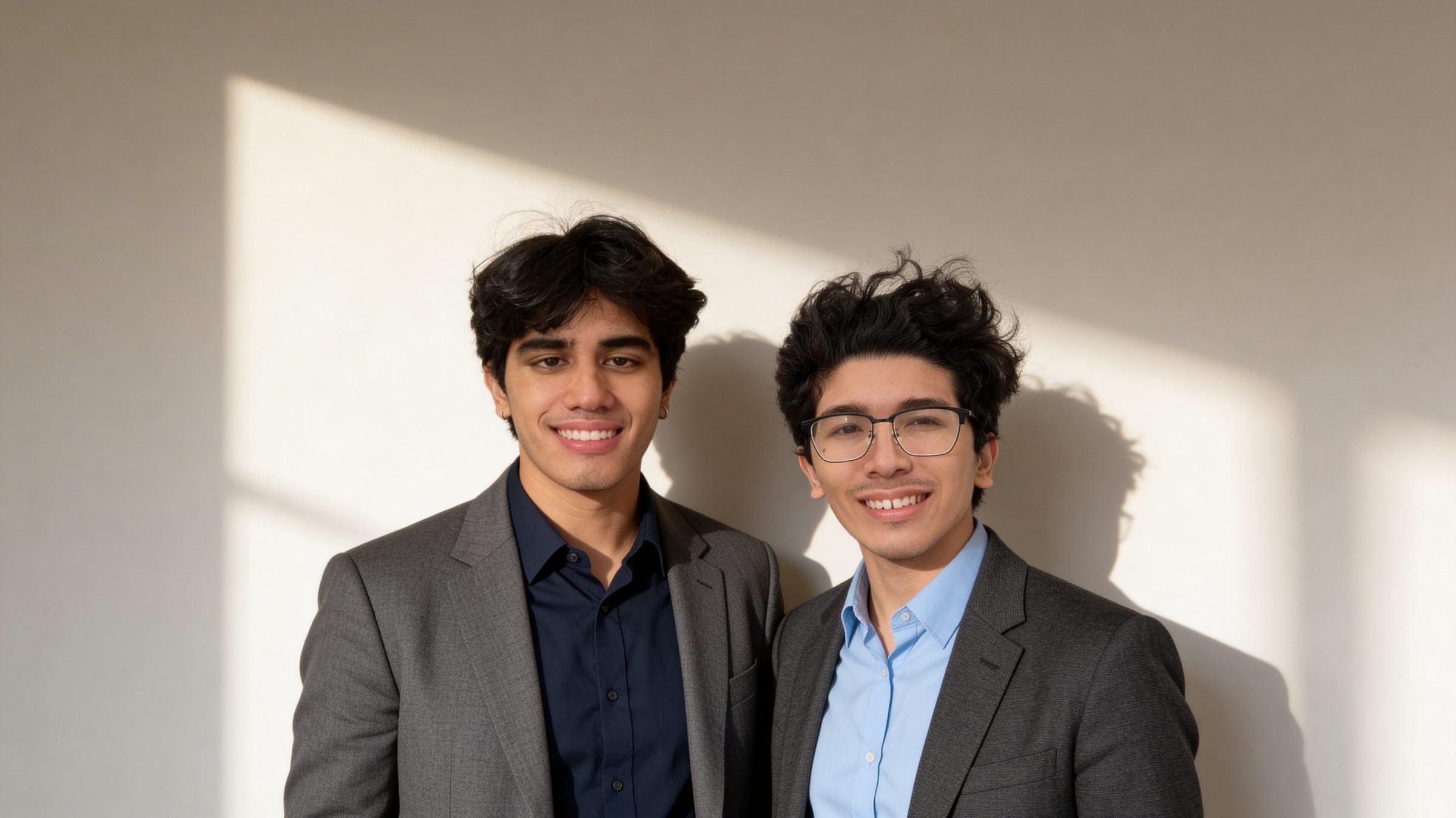
The people building it.
Rych Beluan attended the Philippine Science High School, and later, Enfant Cheri and studied psychology at Ateneo de Davao University before leaving to build something. Not because the discipline lost him. Because it gave him something he could not act on inside a classroom.
Psychology, to Rych, is not a clinical practice. It is infrastructure. The invisible architecture underneath every high-stakes decision, every trusted relationship, every moment where a person either feels genuinely known or realises they do not.
He worked as a communications analyst at the United Nations Development Programme and served as Ambassador of Psychology for CPCD, a collegiate consortium of eleven member universities across Davao representing over 100,000 students. The thread across all of it was the same question: how do systems either account for human psychology, or collapse because they ignored it.
That question led him to private banking and wealth management, two industries where the quality of a relationship is the actual product, and where the psychological intelligence that makes those relationships work has always been treated as a personal gift rather than something that could be built, captured, and protected. Having spent time inside the operational reality of how these relationships are managed at the institutional level, his view is that psychographic intelligence in this context is not a soft complement to financial expertise. It is the actual driver of client retention and relationship longevity, and the reason it has never been treated as such is simply that no one built the infrastructure to hold it. Synatsis is that infrastructure.
David Esfandiary didn’t discover technology in a university lecture. He grew up in the United States with a keyboard under his fingers before moving to the Philippines in 2020 to formalize that intuition at Ateneo de Davao University, where he pursued Computer Science. While his seat on the President's List and university debate titles suggest a student of the book, his real work happens at the intersection of raw logic and human friction.
Code, to David, is more than a sequence of bytes. It is a translation layer. It is the bridge between the messy, high-stakes requirements of a business and a hardened, automated reality. Rather than simply building software, he architects systems where security and scalability are the baseline, not the goal.
He served as a Backend Developer and Tech Lead, guiding teams through high-stakes security migrations, and acted as the technical architect for complex business operations systems, where he translated "operational pain points" into digital roadmaps. A single line of reason pervades all his work: how to turn a complex, manual process into a high-performance engine that doesn't break under pressure.
That obsession led him to the world of CRMs: an industry littered with static databases that act as digital filing cabinets rather than active participants in a relationship. He believes that technical architecture in a relationship context is not just about storing names and dates. It is about building the predictive, AI-driven logic that allows a relationship to scale without losing its soul.
The industry has long treated "technical-to-layman" communication as a rare soft skill; David treats it as a core engineering requirement. If psychology is the invisible architecture of a decision, David is the one building the server rooms to house it.